 Cairn
Docs
Claims
Blog
Packages

A claim isn't a test that passed once. It is a statement Lean checks for every state the app can be in, under an id that tests, docs, reviews and agents can cite. Here is one running.
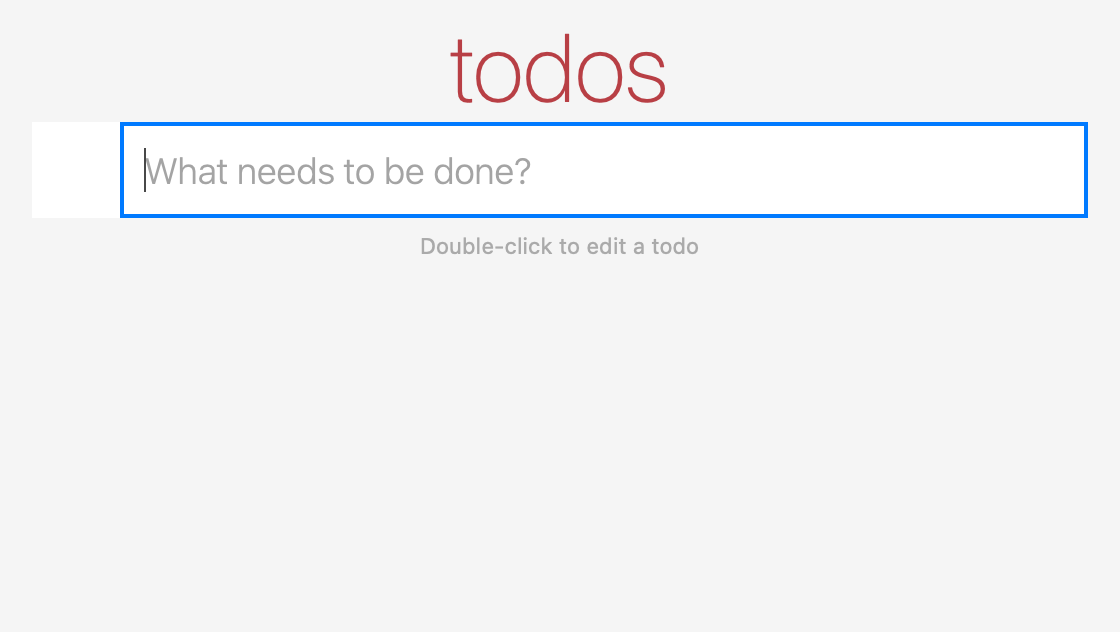
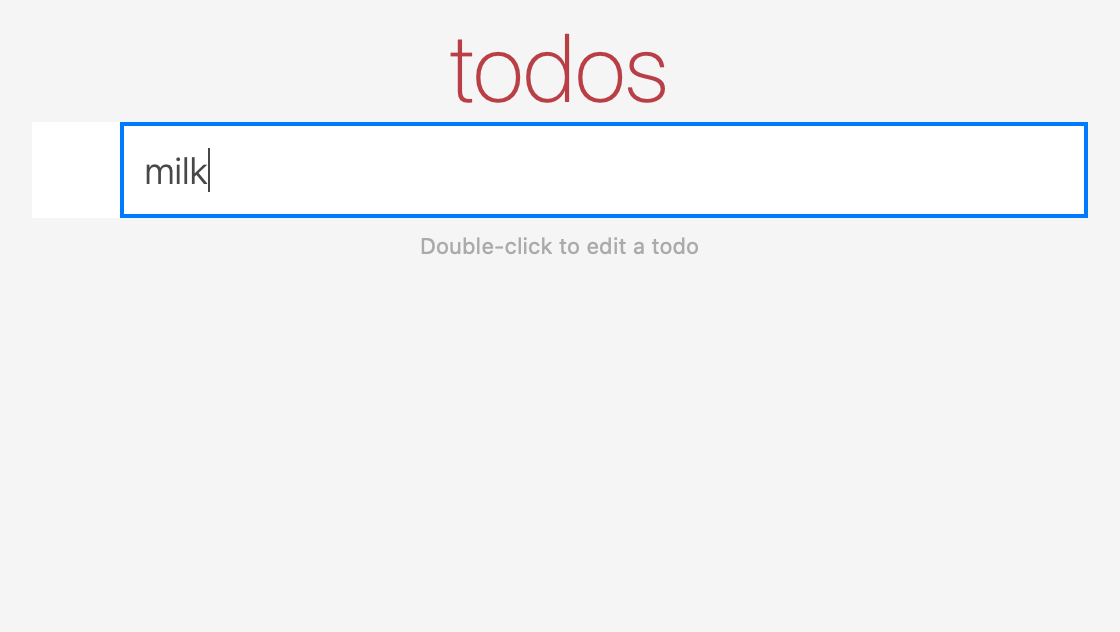
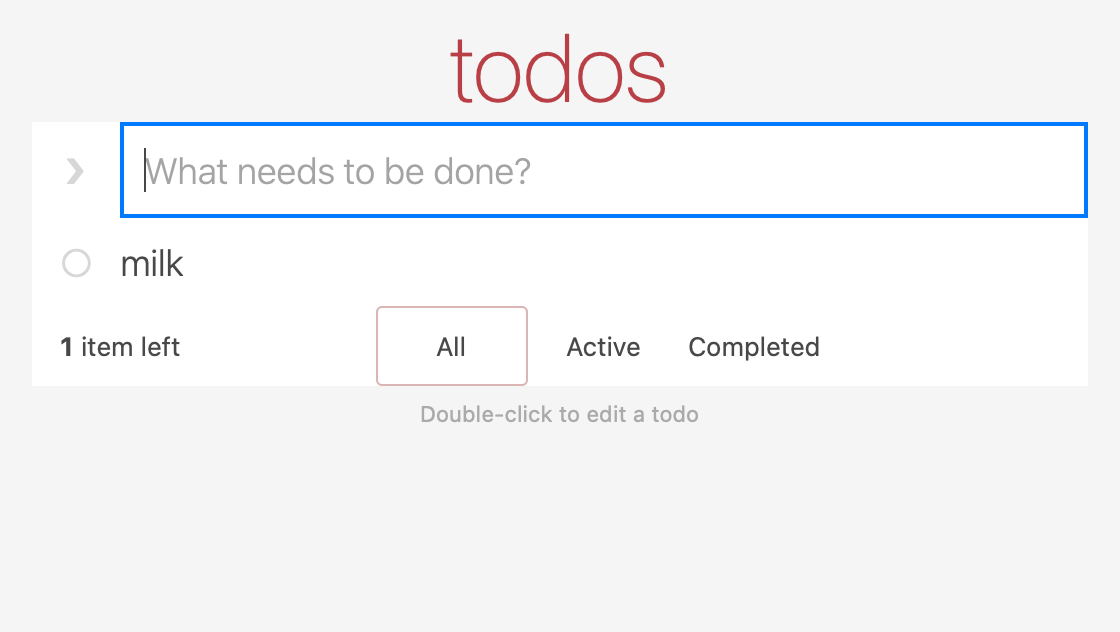
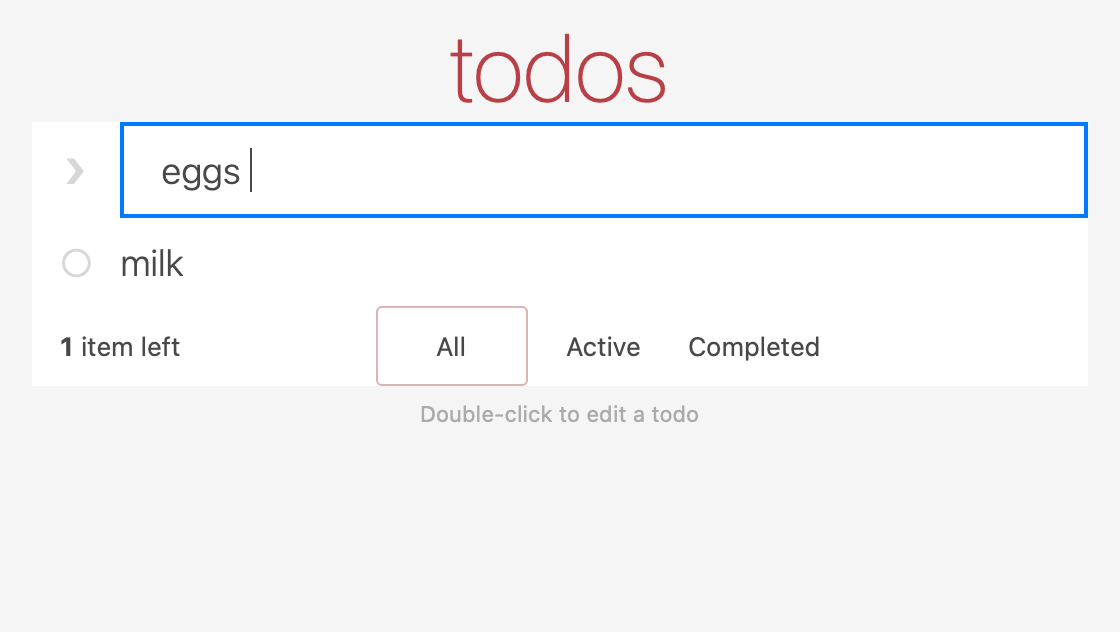
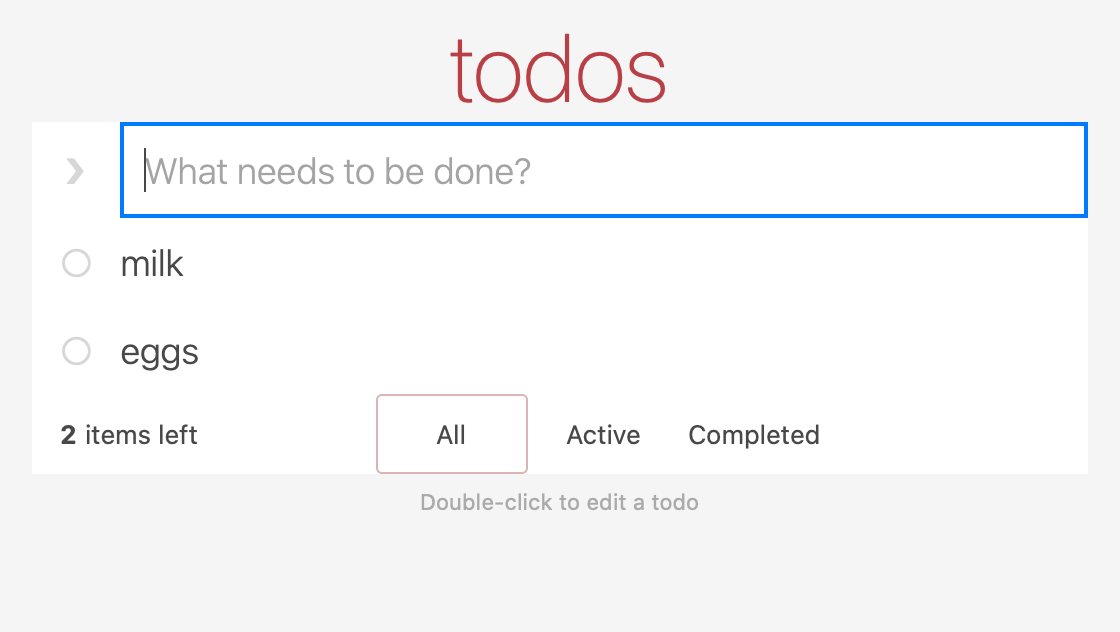
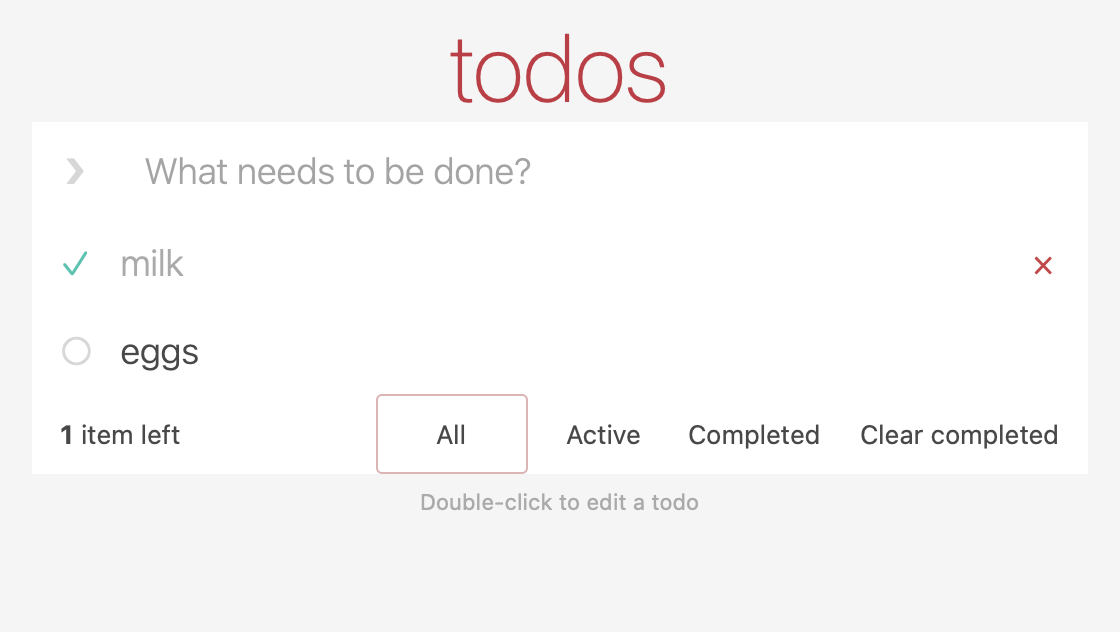
^216 flow Add two todos and complete one
- Type “milk”
edit ^202 (.insert "milk") - Press Enter
submit ^202 - Type “␣␣eggs␣”
edit ^202 (.insert " eggs ") - Press Enter
submit ^202 - Check milk
press ^204#1
Goal Two todos in order, eggs trimmed, milk completed, the field empty, 1 item left. proved reachable
^202 move New todo
Enter adds the trimmed text as an active todo at the end of the list and clears the field; blank text adds nothing and stays in the field. Nothing else changes.
proved in every state where it's offered
^203 move Mark all as complete
Every todo, listed or not, is completed; or, when all were completed already, every todo is active again.
proved in every state where it's offered
^204 move Complete a todo
The todo is completed, or active again; the counter follows, and under a filter it leaves or joins the list. Nothing else changes.
proved in every state where it's offered
^205 move Edit a todo
The todo's row becomes a field holding its title, with the caret at the end and keyboard focus in it.
proved in every state where it's offered
^206 move Delete a todo
The todo is gone, with its row. Nothing else changes.
proved in every state where it's offered
^208 move All
Every todo is listed; only the filter changes.
proved in every state where it's offered
^209 move Active
Only active todos are listed; only the filter changes.
proved in every state where it's offered
^210 move Completed
Only completed todos are listed; only the filter changes.
proved in every state where it's offered
^211 move Clear completed
Every completed todo is removed, listed or not; active todos stay in order, and the button disappears.
proved in every state where it's offered
Each step of that run is a move with its own id, and each move promises what follows, in words for people and in a statement for Lean. The flow, ^216, is a claim too: Lean checks that every step is offered when it's taken and that the goal holds at the end. Change the app so that any of it stops being true, and it doesn't build.
What's in one
Here is the whole of Reset, in Counter. The two lines in green are for people; everything under them, in gold, is for the checker.
move1 ^22 reset (s : State)3 "Reset"4 in ^35 where does "Press Reset."6 sees "The count is zero, and Reset disappears." enabled7 := resetEnabled s8 on press9 apply := { s with count := 0 }10 post s' := s'.count = 0 ∧ resetEnabled s' = false11 sound := by12 intro s _13; exact ⟨rfl, rfl⟩14- A move Something a person can do. Cairn's other claims are flows (a path through moves), invariants (always true) and places (where things show). Like a test step, except it's declared with the app instead of written after it.
- The id, ^2 Permanent: never renumbered or reused. Reviews, docs and agents cite it. A data-testid that can't drift, kept in a ledger (claims.lock).
- The input, s The app's whole state at the moment of the press. It's a variable, so everything below holds for any s.
- The title The button's label, as people see it.
- The place, ^3 Where the button lives. ^3 is a claim too, a place: Counter's window. The build checks that ^3 exists and is a place.
- What it does, in words does says what you do, sees what you'll see next: plain English for reviewers, shown on the claim's page. Lean checks the lines below, not these. Like the name in test('…').
- When it's offered Reset exists only while this is true. Cairn proves the button is on screen exactly then, in every state. Playwright's toBeVisible() checks one page load.
- A plain function The same Lean function the view calls to decide whether to draw the button, so the claim and the screen can't disagree. No selector to keep in sync.
- On press The contract for one press, as given, when, then: enabled is the given, apply the when, post the then. Given-When-Then, with a proof in place of a test run.
- The new state A copy of s with the count set to 0. Pure: nothing changes in place, and nothing is asked of the host. Like a Redux reducer.
- The promise About the new state s′: the count is 0, and (∧) Reset is gone. An expect(), stated for every state instead of asserted on one run.
- A proof begins by switches from stating to proving. sound is the claim that post always follows from apply.
- For any state Take any s where Reset is enabled: any s, not only the ones a test tried.
- Both halves hold rfl: true by computing, one for each side of the ∧. If either fails, the app doesn't build. Like Rust's assert_eq!, except the compiler settles it for every s instead of running it on one value.
sees is checked when the app builds.What they buy you
Every state, not one run
A test drives the app down one path and checks where it lands. A claim's proof is about every state at once, including the ones nobody thought to try.
- A test One run: the six states flow ^216 passes through. It says nothing about the other 394.
- A proof Invariant ^212, “the counter shows the number of active todos, and ids are distinct”, holds in all 400, and in every state past them: 1,004 moves lead out of what was explored.
Nothing happens without one
An event arrives
a click, a key, a timer
^N owns it
Its move runs, and its promise holds afterwards.
No claim owns it
The state is unchanged and nothing is asked of the host. update_unclaimed
An app's update is built only from its moves, so this holds for every Cairn app, proved once in
the framework. Every effect an app asks for (a file write, a sound, a timer) comes from some move
(update_effect). The list of claims is the list of what the app can do, with nothing hiding
outside it.
One name, everywhere
The id is how everything else refers to the behaviour, and it means the same thing in all of them:
- The code
move ^204 toggleTodo (s : State) (k : Nat) "Complete a todo" - Accessibility
identifier "^204#1"the checkbox on milk, for VoiceOver and UI tests - A flow
witness … submit ^202, press ^204#1 - Its page
/packages/cairn_examples/claims/204/ - Review
^204 “Complete a todo”: meaning changed
A data-testid names an element and drifts when someone renames it. ^204 names a behaviour
and can't be renamed: tests, docs, agents and bug reports that cite it stay right for as long as
the app exists.
Meaning changes show up in review
Each package keeps a ledger of every id it has issued. A refactor that changes no promise passes quietly; one that changes what a claim says is flagged, and has to take a new id or be accepted in a commit someone reviews.
claims.lock cairn_examples, an excerpt
- 204moveactivebfb82886ecadd91cComplete a todo
- 212invariantactive8b1d23f718f063ecCounter and ids
- 213invariantretired-The list is the filter applied to the todosStyle gained an image field, which changed the statement: reissued as ^225
- 215moveretired-Back through filtersWeb only: the Mac app has no Back command
- 216flowactive059a40708193b6f5Add two todos and complete one
- 225invariantretiredcdded3b5839c217cThe list is the filter applied to the todosFieldView gained secure: reissued as ^226
- 226invariantactive5df0a26eadf00c3cThe list is the filter applied to the todos
What the build says
warning ^225 “The list is the filter applied to the todos”: meaning changed (statement cdded3b5839c217c → 5df0a26eadf00c3c): give it a new id or lake exe ledger update --accept
error ^215 move “Back through filters” is in claims.lock but gone from the code. Ids never disappear: retire it with retire ^215 move "Back through filters" because "…"
A released claim is a promise to whoever relies on it, so retiring one needs a major version: semver for guarantees, checked by the build. Claims has the ledger's rules.
Six kinds
Moves are what people do. The other five say how moves fit together, what always holds, and what is taken on trust.
move
Something a person can do: when it's offered, what it does, the promise afterwards and its proof.
^204 Complete a todo
flow
A goal and a path of moves that reaches it. Lean checks every step is offered and the goal holds at the end.
^216 Add two todos and complete one
invariant
A property every move keeps, proved once, so it holds in every state the app can reach.
^212 Counter and ids
assume
What the proofs rely on and can't prove, mostly about the host. Recorded, checked by fuzzing, visible in every theorem that uses it.
cairn^908 The host's clock is monotonic
place
A region of the view where moves appear: a window, a menu, a panel. Claim pages are grouped by them.
^201 Todos window
retire
A tombstone with a reason. The claim is gone, the id stays issued forever, and retiring a released claim is a breaking change.
^215 Back through filters
How sure we are
Each claim carries the evidence it has, not only the strongest. They rule out different things:
- ProvedA counterexample anywhere: every state, every key, every input.
- FuzzedA counterexample in the random sessions it ran, the claim checked after every step.
- TestedThe running app disagreeing with the proved model, on the sequences it drove.
- SeenA control that's never drawn, a flow that can't be clicked through.
- AssumedNothing by itself. Written down, so every proof that relies on it says so.
A proof still trusts that its statement says what you mean: post s' := True is easy to prove
and promises nothing. How much to trust a claim says what each kind of
evidence still takes on faith, with a bug the tests miss and the proof catches, and
the evidence ladder says how the build computes them.
The registry's claim pages
Every package on the registry has claim pages: each version's claims, grouped by the place
(window) they belong to, and a page for each claim with what you do and see, a flow's steps, its
evidence theorems and where it's defined. They are rendered from the claims export that
cairn publish sends with each version, checked by the registry against the version's
claims.lock. Nothing on them is written by hand. You can also
click through Todo's states, every control labelled with its claim.
| Place | What it covers |
|---|---|
| The trusted base | the host's assumptions, cairn^7, cairn^214, ^9xx and ^10xx |
| Counter | cairn_examples^1–^6: two moves, two flows and a retired claim |
| Basics | cairn_examples^101–^109: a field, a keyed list and an invariant |
| TodoMVC | cairn_examples^201–^226: the full TodoMVC spec |
| Clock | cairn_examples^401–^409: time, timers and files |
| Tray | cairn_examples^450–^462: a menu bar item, a submenu and an overlay panel |
| Gallery | cairn_examples^501–^513: images and a grid that fits the window |
| Pairs | pairs^1–^32: a deal of the pack, two cards up at most, and every game can be won |
| Sky | sky^1–^36: sign in, the session, and a feed with no duplicates or gaps however its pages and refreshes race |
| cairn_atproto | cairn_atproto^1–^16: the session machine, one refresh at a time, each call sent at most twice |
| Yap | yap^301–^399: a menu bar menu, an overlay and the dictation machine |
The pages show the evidence the export holds: proofs and their axioms, assumptions, flow witnesses, retired and moved ids. Fuzzing, conformance and screenshots need a build that runs the app, and a claim lists them as not shown yet until CI publishes them. A version published before the export existed shows its ledger alone.